
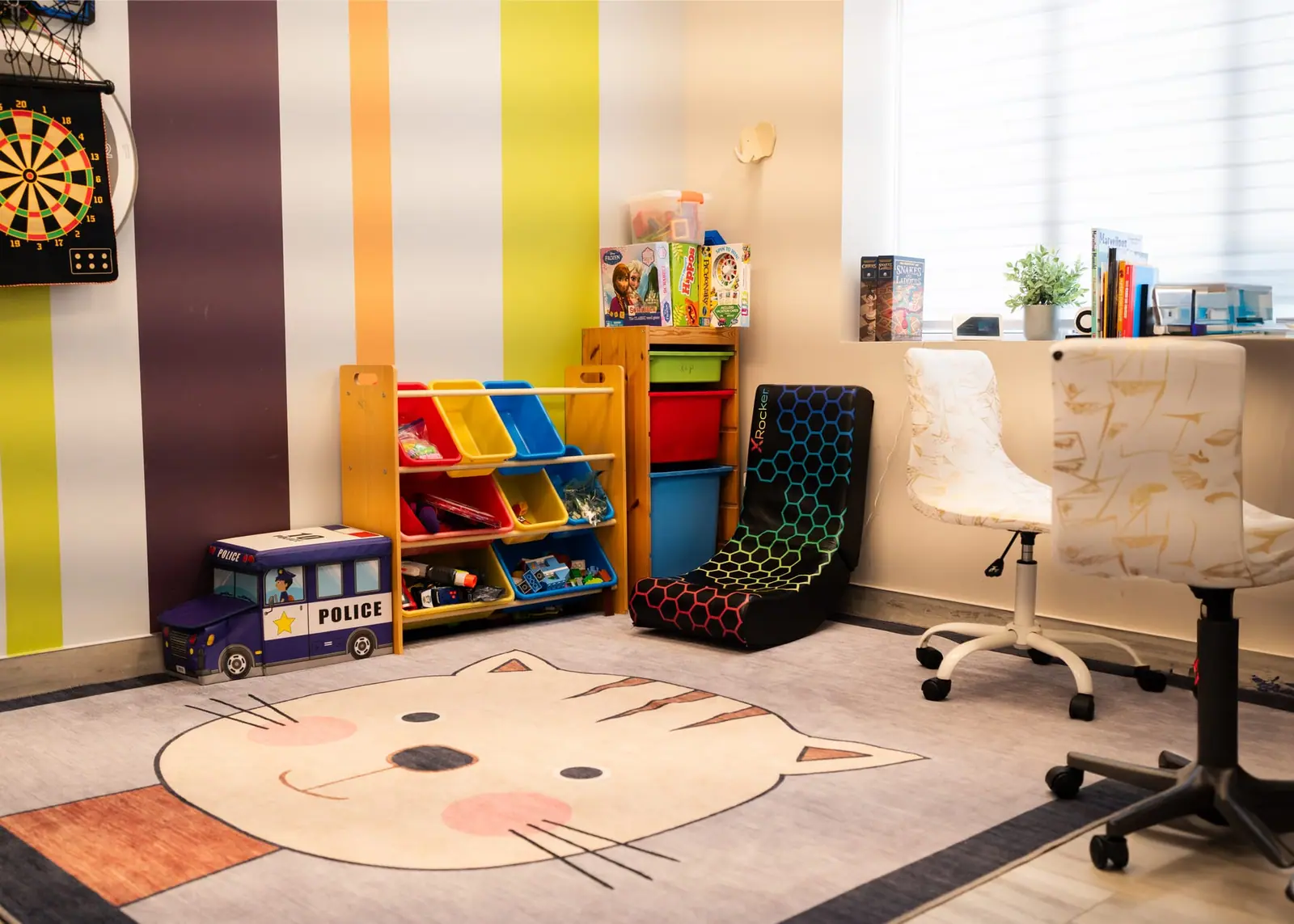
You can expect to spend some time discussing situations and challenges in your life, then you and your therapist will choose an approach or a combination of approaches that best fits your specific situation.
Acceptance and Commitment Therapy (ACT)
ACT uses acceptance and mindfulness strategies to help clients connect with the present moment and make healthy contact with thoughts, feelings, memories, and physical sensations that were previously avoided. It focuses on acceptance, cognitive defusion, being present, self as context, values, and committed action.
Art Therapy
Art therapy helps clients explore and express thoughts and feelings through creativity, with the process focused on the thoughts and feelings evoked rather than the look of the artwork. It can suit clients who want a more hands-on experience or who feel more comfortable communicating non-verbally.
Cognitive Behavioural Therapy (CBT)
In CBT, the therapist and client work together to identify unhelpful thought patterns and explore ways to replace them with more adaptive ones, often with practice between sessions such as journaling and thought records. CBT is a useful tool for addressing depression, anxiety, PTSD, and other mood disorders.
Cognitive Processing Therapy (CPT)
CPT is a specific type of cognitive behavioural therapy used to reduce symptoms of PTSD from traumatic events. It generally involves 12 sessions that help clients learn how to challenge unhelpful beliefs related to trauma.
Dialectical Behaviour Therapy (DBT)
DBT uses techniques similar to CBT, with a unique focus on acceptance of the client's experience. The therapist and client work on distress tolerance, emotion regulation, mindfulness, and interpersonal effectiveness.
Emotionally Focused Therapy (EFT)
EFT is a humanistic approach that helps facilitate attachment and bonding, making it a helpful tool for couple or family challenges. Clients learn to express emotions in a way that helps them connect, and new ways to listen and stay attuned to one another.
Eye Movement Desensitization and Reprocessing Therapy (EMDR)
EMDR was designed to alleviate distress associated with traumatic memories. The client is exposed to emotionally disturbing material in brief sequential doses while focusing on an external stimulus, as the clinician helps activate natural healing processes.
Mindfulness-Based Cognitive Therapy (MBCT)
MBCT uses cognitive and mindfulness strategies to help clients see themselves as separate from their thoughts and moods. Clients learn how to use cognitive methods and mindfulness meditation to interrupt automatic processes that often trigger negative emotions.
Narrative Therapy (NT)
Narrative Therapy separates clients from their problems, which allows issues to be addressed in an external, objectifying way, as therapist and client build upon alternative or preferred storylines. It is a helpful tool for individuals, families, and couples with relationship challenges.
Psychodynamic Therapy
Psychodynamic therapy uses self-reflection and self-examination to find psychological roots to emotional suffering, and recognizes that events in early life can continue to affect people as adults. It focuses on acknowledging emotions, understanding avoidance, and identifying patterns in interpersonal relationships.
Solution-Focused Brief Therapy (SFBT)
SFBT is a goal-oriented therapy that focuses on a client's present and future circumstances rather than past experiences. The therapist encourages the client to envision their future and offers the skills, resources, and abilities needed to work toward that vision.